Enter a keyword below to search for articles and products.
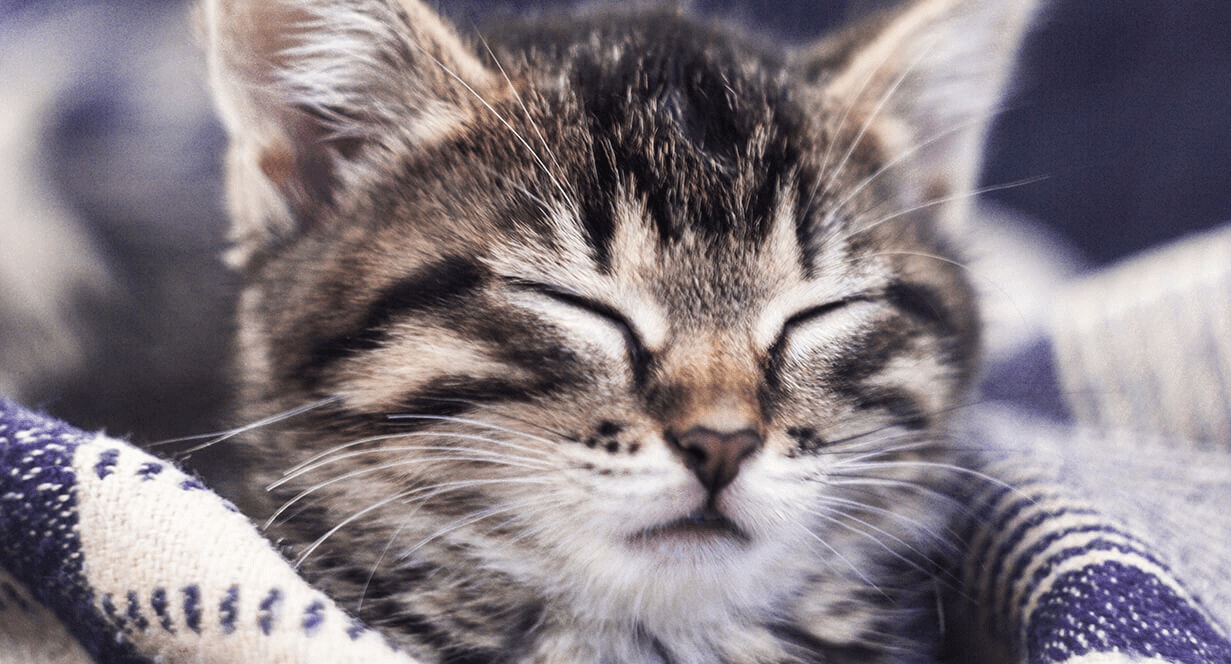
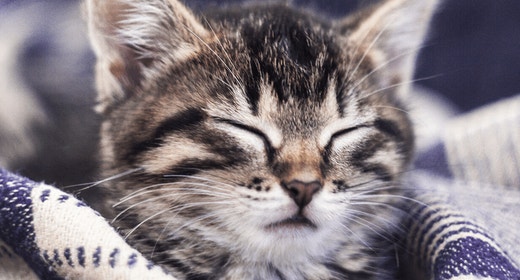
Kittens can get hairballs, although it’s not as common as in adult cats. Kittens are adept learners, and as they grow up, their grooming habits will mature as well. This could lead to hairballs, especially if your kitten has longer hair.
Most cats spend a considerable amount of time grooming their coats. As they groom, they can swallow hair, which may build up over time in their stomach. If the hairball doesn’t pass from the stomach, the cat will attempt to eliminate it by coughing or gagging.
Many cats will get a hairball at some point in life, but some kittens, such as long-haired breeds and cats that groom excessively, are especially prone to hairballs.
You can help reduce the number of hairballs your kitten or cat experiences in a few ways:
The right diet can help provide hairball relief to both kittens and cats. For instance, the beet pulp in IAMS™ dry kitten formulas helps move hair through the digestive tract.
Maintaining skin and coat health may reduce the risks of excessive shedding, ingestion of hair from grooming, and, consequently, hairball formation as your kitten grows into an adult cat. High-quality, animal-based protein and fat, found in the IAMS™ kitten formula, provide important nutrients for skin and coat health.
In cats and kittens that are prone to hairballs, frequent brushing can help reduce the amount of hair they ingest, thereby reducing the risk of hairball formation.
Corn is found in many cat foods — but not all corn is created equal. Learn more about this ingredient, its forms and its role as a source of energy for your cat.
Corn is included in cat food formulas in various forms, such as ground corn, corn meal, corn grits, corn gluten meal and corn bran. When reviewing the ingredients list on cat food packaging, you may see one or more of the following corn ingredients:
Corn Ingredient | What It Is |
Ground corn or corn meal | Finely ground and chopped whole corn |
Corn grits | The portion of ground corn containing little or none of the bran (fiber) or germ (the small protein portion at the end of the kernel) |
Corn bran | The outer coating of the corn kernel; largely fiber |
Corn gluten meal | A dried protein source that remains after the corn’s bran has been separated and removed and a large portion of the carbohydrate and germ have been removed |
Corn is included in the formulas for all IAMS cat foods, including IAMS™ ProActive Health™ Healthy Adult and ProActive Health™ Healthy Kitten. It is more appropriate to associate the corn used in our products with “corn bread” rather than “corn on the cob.” The difference is similar to cooked corn versus raw corn. We use only the highest-quality corn in our products. The corn is finely ground to a meal, which breaks up the outside covering of each kernel, and then it is cooked, which increases its digestibility.
Corn grits and corn meal are used in our foods as high-quality sources of carbohydrates, which are an important source of energy. Corn generally also results in lower glycemic and insulin response than rice. This can be especially beneficial for senior and overweight cats.