Enter a keyword below to search for articles and products.
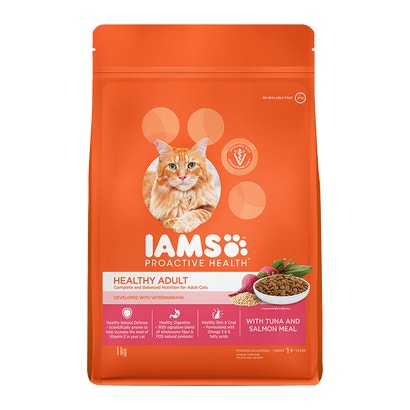
Cat food labels provide limited information regarding the nutritional value of the package contents. It is important for customers to know what can and cannot be determined from the label, and what information is particularly important. Major components of a pet food label include:
Values in the guaranteed analysis are expressed as either minimum or maximum. A maximum guarantee (% max) means at most this specific amount of the nutrient is included in the formula. A minimum guarantee (% min) means at least this specific amount of the nutrient is included in the formula. The following four nutrients must be included on all pet food labels:
For example, a cat food with a 25% minimum crude protein guarantee should contain at least 25% protein, but could contain much more. The only way to determine the actual amount is by laboratory analysis.
Other information may be guaranteed on cat food products, such as magnesium (% max), taurine (% min), ash (% max), and linoleic acid (% min).
Ingredients must be listed in order of abundance (largest quantity listed first).
AAFCO nutritional adequacy statements are required on all pet foods. Products may either be formulated or tested according to AAFCO procedures and recommendations.
Veterinary-exclusive products include statements such as, 'This product is intended for intermittent feeding only' and 'Use only as directed by your veterinarian.'
Manufacturing codes allow the company to track products for quality and inventory issues. In order to quickly and efficiently handle a customer inquiry, the company's customer service department will usually ask the customer for this code.
Expiration or 'Best Used By' dates are optional, but are helpful in determining product freshness and shelf life.
The manufacturer's information should include the company name, address, and phone number so customers can quickly and easily obtain product information.
A toll-free telephone number should be provided as a convenience to the customer and to ensure that a charge is not incurred when calling for information.
Your cat’s skin and coat help keep viruses and bacteria from entering the body and prevent water and heat from leaving it. And because nutrients such as protein, fat, vitamins and minerals play crucial roles in your cat’s skin and coat health, it’s important to make sure your cat is receiving the right types and amounts. IAMS™ cat foods are designed to provide your cat with the nutrition they need to support their skin and coat health.
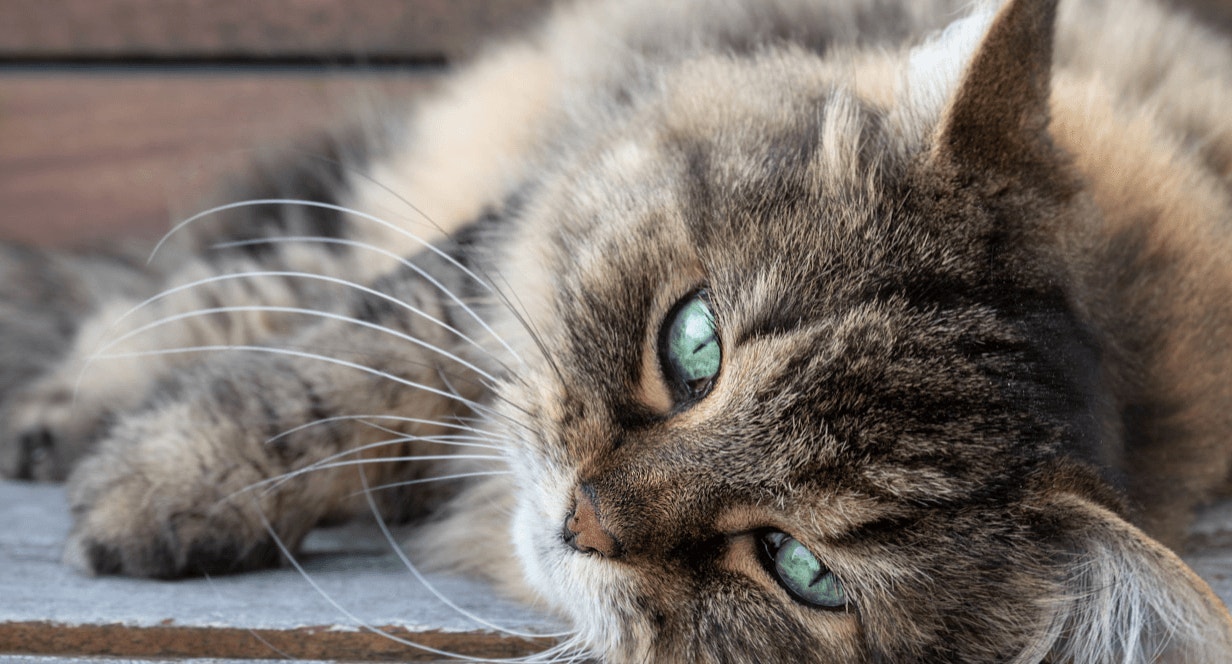
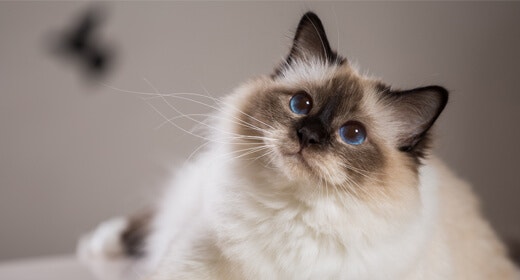
Without Proper Nutrition
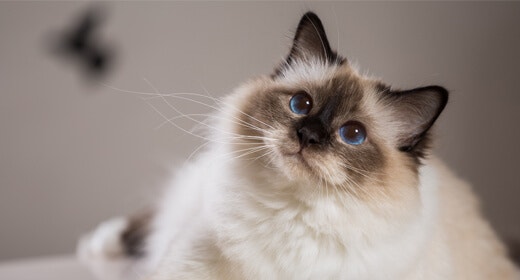
With Proper Nutrition
Your cat’s hair coat is composed almost entirely of protein. If your cat’s diet doesn’t contain enough quality protein, her hair may fall out or become dry, weak and brittle.
But not all proteins are alike. Proteins are found in both animal- and plant-based ingredients. Animal-based proteins contain all of the essential amino acids cats need, while plant-based proteins may contain only some. Cats need the nutrients in animal-based protein sources for the best health.
Fats also can be found in both animal- and plant-based ingredients, and are incorporated into skin cells as fatty acids. Three fatty acids help maintain your cat’s skin and coat condition:
Without these fatty acids, cats may experience a dull, dry coat, hair loss and greasy skin.
To promote your cat’s skin health and elasticity, make sure to provide clean, fresh water at all times.
Most cat foods contain more than the required amount of linoleic acid, an omega-6 fatty acid. However, IAMS research shows that it is not just the amount, but the ratio of omega-6 to omega-3 fatty acids that is most beneficial to cats.
The optimal omega-6 to omega-3 fatty acid ratio to maintain a healthy skin and coat in cats is between 5:1 and 10:1. In other words, five to 10 omega-6 fatty acids should be present for every one omega-3 fatty acid.
Vitamins and minerals are essential for the development of healthy skin and coat. The best way to provide them is through a complete and balanced diet rather than through supplements.
| Vitamin or Mineral | Role in Skin and Coat Health |
| Vitamin A | Necessary for growth and repair of skin |
| Vitamin E | An antioxidant that helps maintain the health of skin cells |
| Vitamin C | An antioxidant that helps maintain the health of skin cells |
| Biotin | Aids in the utilization of protein |
| Riboflavin (B2) | Necessary for fat and protein metabolism |
| Zinc | Necessary for fat and protein metabolism |
| Copper | Involved in tissue, pigment, and protein synthesis |
The protein, fatty acids, vitamins and minerals in your cat’s food all play a vital role in your cat’s skin condition and coat health. While other factors, including the season and your cat’s age, can also affect the health of your cat’s hair and skin, optimal nutrition can help support a shiny coat and healthy skin.