Enter a keyword below to search for articles and products.
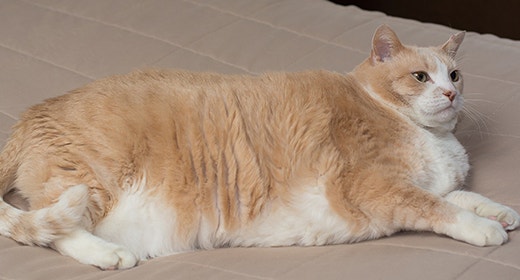
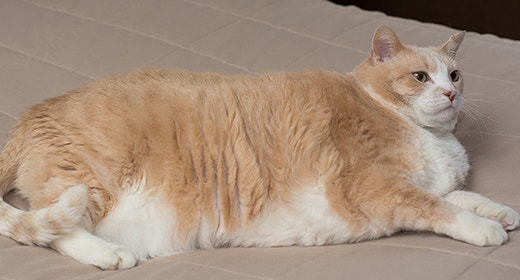
An obese cat is not a pretty sight. Cumbersome and clumsy, they suffer a marked loss in athletic ability and appearance. Decreased flexibility prevents them from thoroughly grooming, which can cause skin problems. Obese cats also have an increased risk for diabetes and are poor candidates for surgery and anesthesia.
Obesity results when an animal consistently eats more calories than they need. This can be caused by overfeeding, inactivity, reproductive status, environment, body type, age or genetics.
Assessing body condition is important in the overall evaluation of your cat’s nutritional well-being and can help in determining feline obesity. Take a few moments to follow the easy directions in the Cat Body Condition Chart for assessing your cat’s body condition.
If you suspect your cat is obese, the first step is to consult your veterinarian.
Your veterinarian will probably ask you some questions about your cat, such as how much they eat and how much physical activity they get. Answering these questions honestly will help your veterinarian recommend some simple changes to help improve your cat’s weight. Your veterinarian may also perform tests to detect medical conditions that may contribute to obesity — you want to rule these out before starting your cat on any weight-management program.
Your veterinarian may first suggest reducing the amount you feed your cat. If so, begin by reducing the daily portion by 25%. Continue decreasing intake by 10% increments every two to three weeks until your cat loses 1% of their starting weight. For example, if your cat weighs 15 pounds, a 1% loss would be 2½ ounces.
If you feed one large meal a day, or keep food available at all times, try dividing the daily ration into several small meals (at least two meals a day) and pick up what your cat doesn’t eat 30 minutes after each meal.
A diet that contains slowly digested carbohydrates, such as corn and sorghum, can result in lower blood sugar and insulin levels than a diet that contains rice as the primary carbohydrate source. Lower blood sugar and insulin levels can also help with maintaining a proper weight.
Changing diets can be stressful for pets, so if your veterinarian recommends changing diets, proceed slowly.
Begin with a daily portion that mixes 25% of the new food with 75% of the old food. The next day, increase the amount of new food to 50% and decrease the amount of the old food to 50%. During the next few days, continue increasing the proportions of the new food and decreasing the amount of old food until the food consists entirely of the new diet. This method increases the likelihood that your cat will accept the new diet and decreases the occurrence of stomach upsets.
Another way to help your cat lose weight is to increase their activity. Provide cat trees for climbing, or teach your cat to play fetch or walk on a leash. Buy or create your own toys that encourage exercise. One ingenious owner tosses her cat’s dry food ration across the room a piece at a time!
You also can use your cat’s natural hunting instinct to help them lose weight. Hide several small portions of their daily food ration around the house. If you have a multilevel home, make your cat use the stairs.
Use your imagination, but be cautious. Don’t let a fat cat get exhausted, overheated or out of breath. Also, keep in mind that a senior cat may not be able to exercise vigorously.
Replace food treats with rewards like playtime, grooming, stroking or conversation. If you cannot resist the fat cat who begs for food at the dinner table, keep them in another room during dinnertime. If you have a multi-cat household, the consistent winner of the food competition sweepstakes is often obese. If this is the case, separate the cats at mealtimes if possible.
Obesity is easier to prevent than to cure, but it is never too late to reverse it — though it requires long-term patience and commitment. Helping cats lose weight is a slow process. If the amount they eat is severely restricted, the cat risks other health problems.
Increased activity, behavior modification (for both you and your cat) and calorie restriction are your best tools for helping an obese cat lose weight. However, it is important to expect a few setbacks and plateaus. It will take at least four months for an obese cat to lose 15% of their starting weight. At that point, have another look at your cat’s body condition and go from there.
Tips for Starting a Weight-management Program for Your Cat
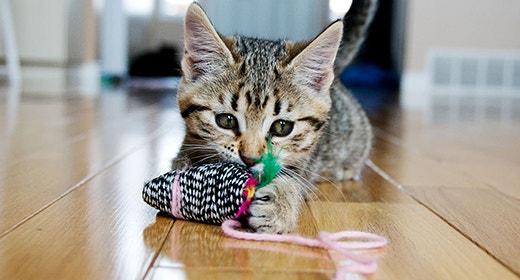
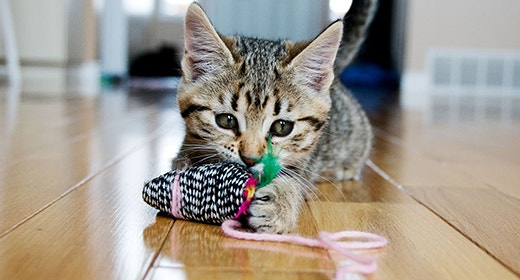
Providing your kitten with the proper nutrition goes way beyond just putting fresh food in a clean bowl. Your kitten’s nutritional needs will change as her body develops through adolescence. Proper nutrition during these critical growth periods will help your kitten mature into a strong, healthy adult cat. Discover four essential kitten-feeding tips you need to know in your kitten’s first year.
Learning what development milestones your kitten will experience in her first year will help you decide what and when to feed her.
After kittens are weaned, they enter a stage of rapid growth, which lasts through the sixth month of life. They need a balanced diet to deliver the nutrients and energy to sustain such rapid development.
Kittens have twice the energy needs of adult cats on a pound-per-pound basis. But their smaller mouths, teeth and stomachs limit the amount of food they can digest during a single meal. Therefore, it may be best to divide their total daily food amount into three or four smaller meals.
Because every bite must be packed with nutrition, kittens require a diet specifically formulated for growth. The best choice is a food with animal-based proteins that is highly digestible, nutrient dense and designed to meet kittens’ unique nutritional needs.
As kittens approach adult size, their nutritional requirements begin to change again. Their rate of growth begins to slow, activity levels may decline and they can start eating fewer, larger meals each day. During this stage, kittens begin to look like adults, but they are still growing and need the special nutrition found in kitten food.
The adolescent growth stage is a time when many cat owners are tempted to change a kitten’s food for variety. But cats do not get bored with a consistent diet of high-quality dry food. You can supplement your kitten’s dry food with a nutrient-dense canned food for a nutritious change of pace.
When your cat is about 12 months old, it’s time to switch to a maintenance formula adult cat food, such as IAMS™ Proactive Health™ Healthy Adult with Chicken. At this age, cats no longer need the extra calories and nutrients for growth supplied by kitten food. As with any change in a cat’s diet, remember to gradually transition from kitten food to adult food over a period of several days.
Monitor your cat’s weight and body condition during the transition, and adjust feeding portions if necessary. Because cats generally eat only what they need, free-choice feeding is fine for most cats. However, some indoor cats that don’t exercise much may overeat if fed free choice. In this situation, portion-controlled feeding twice a day is a good alternative.
Giving a kitten “human food” and table scraps can lead to undesirable behaviors, such as begging or stealing food. Feeding homemade diets or food formulated for adult cats (especially those designed for weight loss), or supplementing a complete and balanced diet with vitamins could cause nutritional disorders.
Kittens and cats are strict carnivores and need the nutrients found in meat. For example, sufficient amounts of taurine, an essential amino acid provided naturally through meat, help cats maintain healthy eyes, heart and reproduction. All IAMS kitten and cat food formulas have optimal levels of taurine for every life stage.