This article is part of a series on how to spot signs of a healthy cat. You can learn more about the key signs here.
Assessing your cat’s body condition is an important step in evaluating their overall nutritional well-being. Particularly in cases where your cat appears to be obese or thin, it is important to evaluate their total health before consulting a vet for a proper nutritional management program. Look for the following signs that your cat is overweight, underweight or just the right size.


Thin Cat
- Ribs, lumbar vertebrae and pelvic bones are easily visible
- Thick neck and narrow waist
- Obvious abdominal tuck
- No fat in flank folds; folds are often absent
Underweight Cat
- Backbone and ribs can be easily seen or felt
- Minimal fat covering
- Minimal waist when viewed from above
- Slightly tucked abdomen
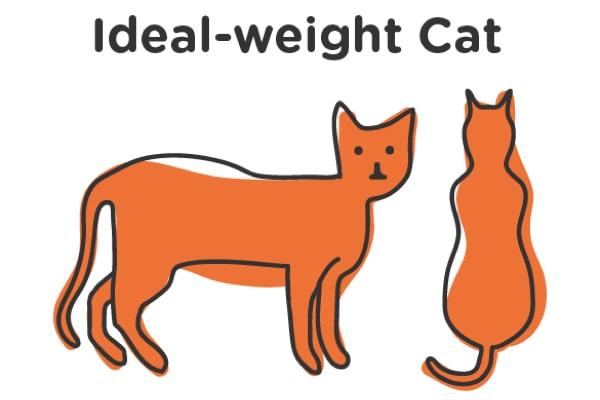
Ideal-weight Cat
- Ribs are easily felt, but not visible
- A slight waist can be seen behind the ribs when viewed from above
- Abdomen is tucked up and flank folds are present
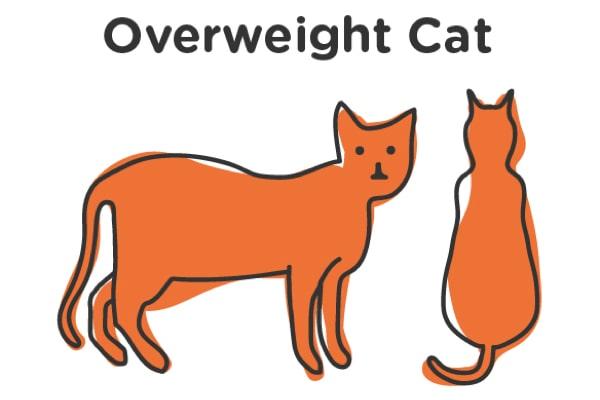
Overweight Cat
- Slight increase in fat over ribs, but still easily felt
- Abdomen is slightly rounded and flanks are concave
- Flank folds hang down with moderate amount of fat — you might notice a jiggle when your cat is walking
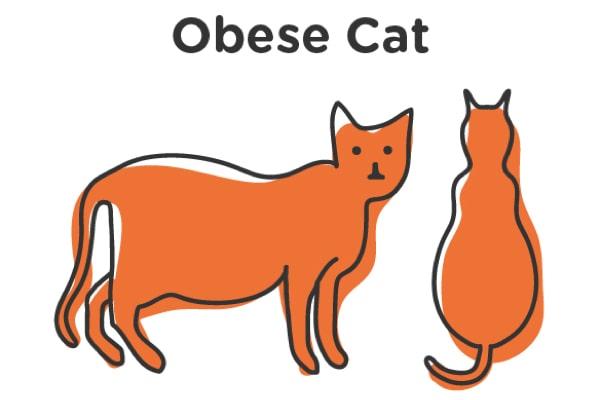
Obese Cat
- Ribs and backbone aren’t easily felt under a heavy fat covering
- Abdomen is rounded; waist is barely visible or absent
- Prominent flank folds sway from side to side when your cat is walking