Enter a keyword below to search for articles and products.
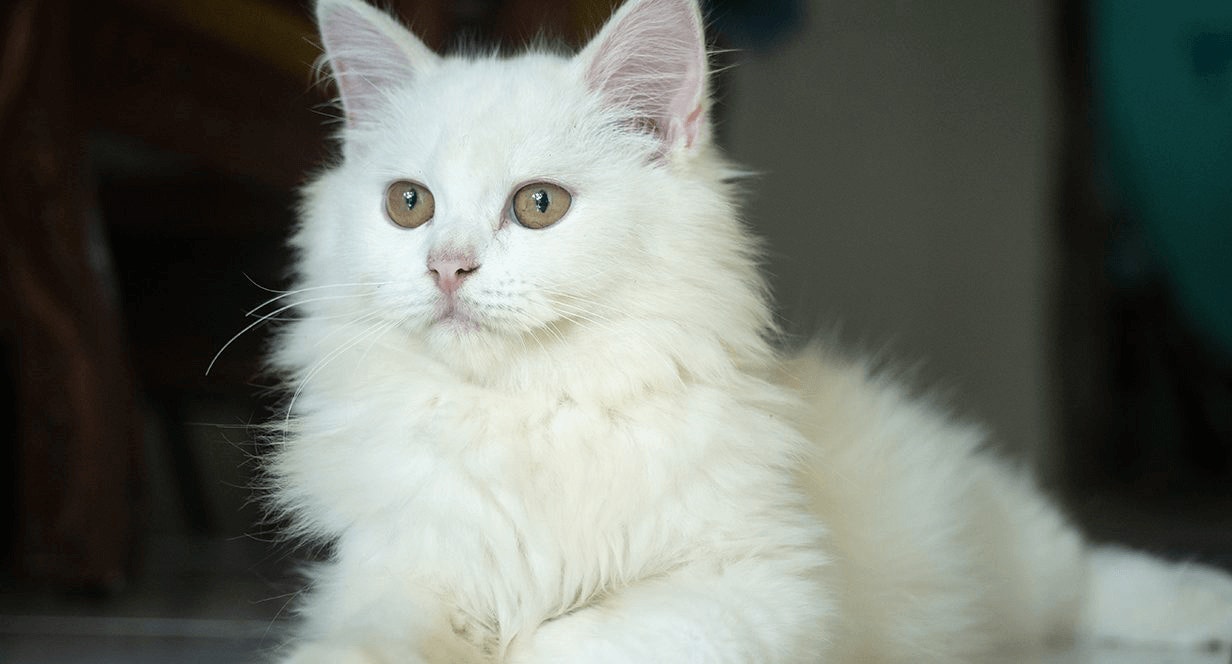
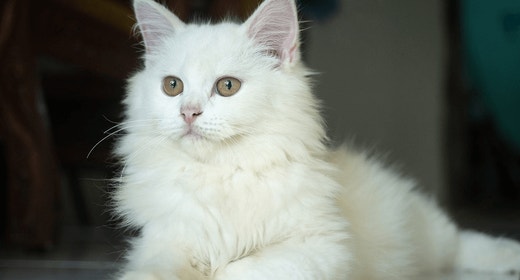
You remember the first time you met like it was yesterday, but lately you find yourself wondering if your cat has entered the golden years.
Here are some things to know about senior cats, including signs they’re ageing and ways to alter their diets to keep them going strong.
Gasp!
Is my baby ... old?
A 12-year-old cat is equivalent to a 64-year-old human.
This 64-year-old
ran a marathon,
so you never
know.
Just like people, cats often show signs that they're getting older:
• Decreased activity
• Joint weakness
• A picky palate
• Confused by the internet
A complete and balanced diet is important, whether or not your cat has underlying health issues.
We get it. Indoor cats have less opportunity to exercise than outdoor cats. Just don’t let those calories add up to unwanted pounds.
10 extra calories a day = up to 1 pound a year.
Picky eating in older age often comes from a reduced ability to taste and smell. Cats 14 years and older are 15 times more likely to be too skinny.
So make sure you’re feeding your cat a food that’s high in calorie density and as tasty as possible.
Senior cats with heart disease may need a special veterinarian-prescribed food.
Senior cats with kidney issues may need veterinarian-prescribed food that's lower in potassium and protein.
Cats with diabetes may need to eat a special veterinarian-prescribed diet.
Consider adding dry food to your cat’s diet which can help remove plaque buildup.
All adults cats, regardless of age, should be fed a carnivorous diet.
An animal-based protein should be the first ingredient on any cat food label.
Good news: You don’t have to worry about providing additional supplements when you choose IAMS™. All foods are nutritionally complete and balanced.
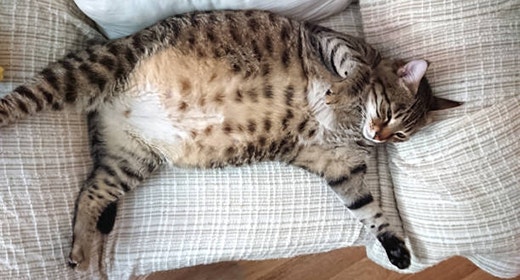
Pregnancy and nursing are responsible for many changes in a cat's lifestyle, as well as in her body. You should pay special attention to your cat’s changing nutritional needs throughout the entire reproduction process.
If you are planning to breed your female cat, it is important to assess her body condition well in advance. Because of the physical demands of pregnancy and nursing, starting off with less-than-ideal health can cause problems.
An underweight cat often can't consume enough food to support her and the developing kittens. Overweight cats may experience abnormal or difficult labor because of large fetuses.
A complete and balanced diet that supports a healthy weight and body condition before breeding helps the female cat maintain her health, and that of her offspring, throughout pregnancy and nursing.
The gestation period for cats is nine weeks. Pregnant cats, like humans, gain weight gradually throughout pregnancy. The energy requirements of pregnant cats are reflected by their weight gain. The energy needs of a pregnant cat should gradually increase so that, by the end of pregnancy, the cat is consuming 25% to 50% more than her normal amount of calories.
Pregnant cats lose weight after giving birth. However, their nutritional needs increase dramatically. Energy needs can be two to three times normal, depending on litter size, in order to produce the milk supply that will support the offspring. Water intake is also important for milk volume.
To ensure a nursing cat is getting enough nutrition, give her a nutrient-dense diet, such as kitten food. Without increasing the amount of food at each meal, increase the number of meals in the day. Free-choice feed her, offering unlimited access to dry food.
By 5 weeks, most kittens show an interest in their mother's food. Gradually, the kittens will begin eating solid food and nursing less. At the same time, the nursing cat will usually start eating less. Most kittens are completely weaned by eight weeks after birth. By this time, the mother's energy requirement is back to normal and she should be eating her usual pre-pregnancy diet.