Enter a keyword below to search for articles and products.


You remember the first time you met like it was yesterday, but lately you find yourself wondering if your cat has entered the golden years.
Here are some things to know about senior cats, including signs they’re ageing and ways to alter their diets to keep them going strong.
Gasp!
Is my baby ... old?
A 12-year-old cat is equivalent to a 64-year-old human.
This 64-year-old
ran a marathon,
so you never
know.
Just like people, cats often show signs that they're getting older:
• Decreased activity
• Joint weakness
• A picky palate
• Confused by the internet
A complete and balanced diet is important, whether or not your cat has underlying health issues.
We get it. Indoor cats have less opportunity to exercise than outdoor cats. Just don’t let those calories add up to unwanted pounds.
10 extra calories a day = up to 1 pound a year.
Picky eating in older age often comes from a reduced ability to taste and smell. Cats 14 years and older are 15 times more likely to be too skinny.
So make sure you’re feeding your cat a food that’s high in calorie density and as tasty as possible.
Senior cats with heart disease may need a special veterinarian-prescribed food.
Senior cats with kidney issues may need veterinarian-prescribed food that's lower in potassium and protein.
Cats with diabetes may need to eat a special veterinarian-prescribed diet.
Consider adding dry food to your cat’s diet which can help remove plaque buildup.
All adults cats, regardless of age, should be fed a carnivorous diet.
An animal-based protein should be the first ingredient on any cat food label.
Good news: You don’t have to worry about providing additional supplements when you choose IAMS™. All foods are nutritionally complete and balanced.

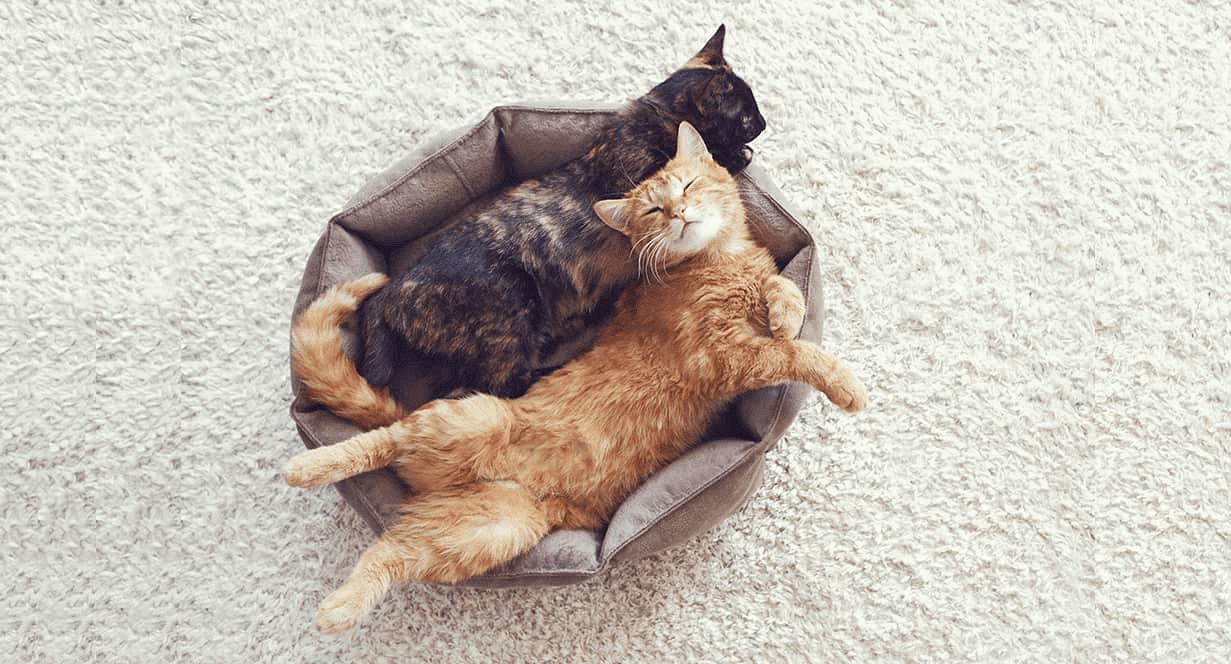
Thinking about getting another cat? Of course you are — they’re the best. Adding a second cat (or third … or fourth …) to your home can be exciting, but there’s a lot to consider before introducing another cat into the mix.
When it comes to cats, the more, the merrier, right? Well, sometimes. Some cats thrive with a playmate or two, while others are more content solo. Personality and age are two factors to consider before bringing home another cat.
It’s important to understand your cat’s temperament when thinking about adding another cat to the mix. It’s just like dating: Compatibility is crucial. Is your pet energetic and playful? Shy and gentle? A couch potato probably isn’t the best match for a marathon runner. Your best bet is to look for a cat with a similar energy level and personality. Not sure about your cat’s vibe? Read more about cat temperament here.
Similar to temperament compatibility, age is also an important factor. Your greatest chance for success is to introduce a new cat into your household when your current cat is still a youngster. If you have an older cat who’s been master of their domain for a long time (read as: cranky), they’re more likely to become territorial and hostile toward the new addition. That’s not to say it can’t be done; the introduction will just need to be handled more delicately than when introducing two younger cats or kittens.
So you’ve found a new cat you can’t wait to bring home to your growing fur family. While it may be tempting to simply put all cats in a room and let them work out the introductions, this can cause a lot of stress for new and resident cats alike. Here are a few ways to help the introduction go smoothly.
Double the cats means double the supplies needed. Before you bring your new addition home, make sure you have plenty of toys, scratching posts and lounging spots so territorial standoffs are less likely. The rule of thumb is to have one more litter box than you do cats, so if you’re becoming a two-cat household, you’ll want to have three litter boxes. You’ll also need double the food, so consider buying in bulk so you can spend less time making trips to the store and more time snapping pics of your adorable new addition.
Give your new kitty a space of their own with a door that can be shut before doing a formal introduction with the existing cat. This will give both cats a chance to adjust to the other’s smell. Once you’re ready to have their official meeting, keep the initial interactions short and well supervised. If things start to feel tense, separate the cats and give them a chance to settle down before trying again. Don’t be discouraged; they’ll come around.
Adding another cat to your household is not without challenges, but it will ultimately bring immense joy to you and your family — and hopefully to your current cat. Or maybe we just shoot for indifference. Now what are you waiting for? Head to your local shelter today!